Coral reefs
Hard and soft corals build structures from shallow, colourful sites to deeper drop-offs and offshore formations.
THE REEFS · MAPUTALAND
Warm Indian Ocean, tropical coral reefs and deep blue water a short boat ride from the beach. Add turtle nesting, whale migration and coastal forest behind the dunes and a dive weekend turns into something much bigger.
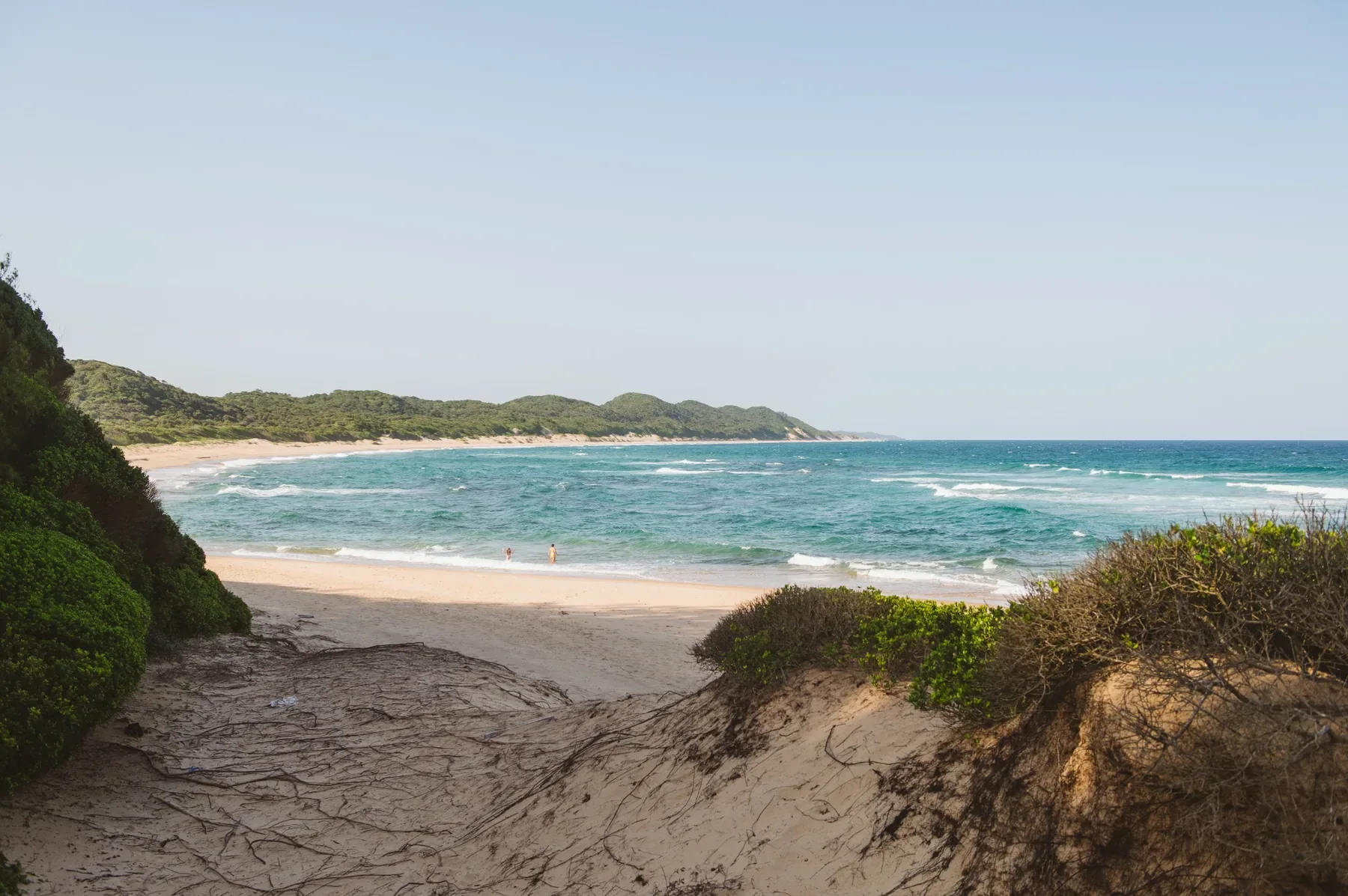
Sodwana Bay is Maputaland's established marine hub. The protected beach and reef sit east of Mbazwana, the inland service town you'll use for fuel, food and supplies.
Sodwana is really three places. The protected beach and marine section inside iSimangaliso. The accommodation and dive operations around Sodwana itself. And Mbazwana, inland, where the shops and fuel are.
The reef system runs offshore along the Maputaland coast. Most visitors sleep either inside the park or a short drive inland. That layout makes Sodwana unusually easy to pair with Lake Sibaya, the Coastal Forest and Tembe without the trip changing character.
Most accommodation and dive operations sit either inside the park or a short drive inland from the beach.
GOOD CONDITIONS YEAR-ROUND · ±1,200 FISH SPECIES CITED BY ISIMANGALISO · ±100 WARM-WATER CORAL TYPES CITED BY ISIMANGALISO · INSIDE THE ISIMANGALISO MARINE PROTECTED LANDSCAPE
Sodwana's reefs sit at the southern limit of the tropical western Indian Ocean's influence. That is why the water here feels more like Mozambique than the rest of the South African coast: corals, reef fish, turtles, rays and warm-water species carried south on the Agulhas Current.
Hard and soft corals build structures from shallow, colourful sites to deeper drop-offs and offshore formations.
Sodwana is known for exceptional Indo-Pacific fish diversity, from tiny reef species to large groupers and schooling fish.
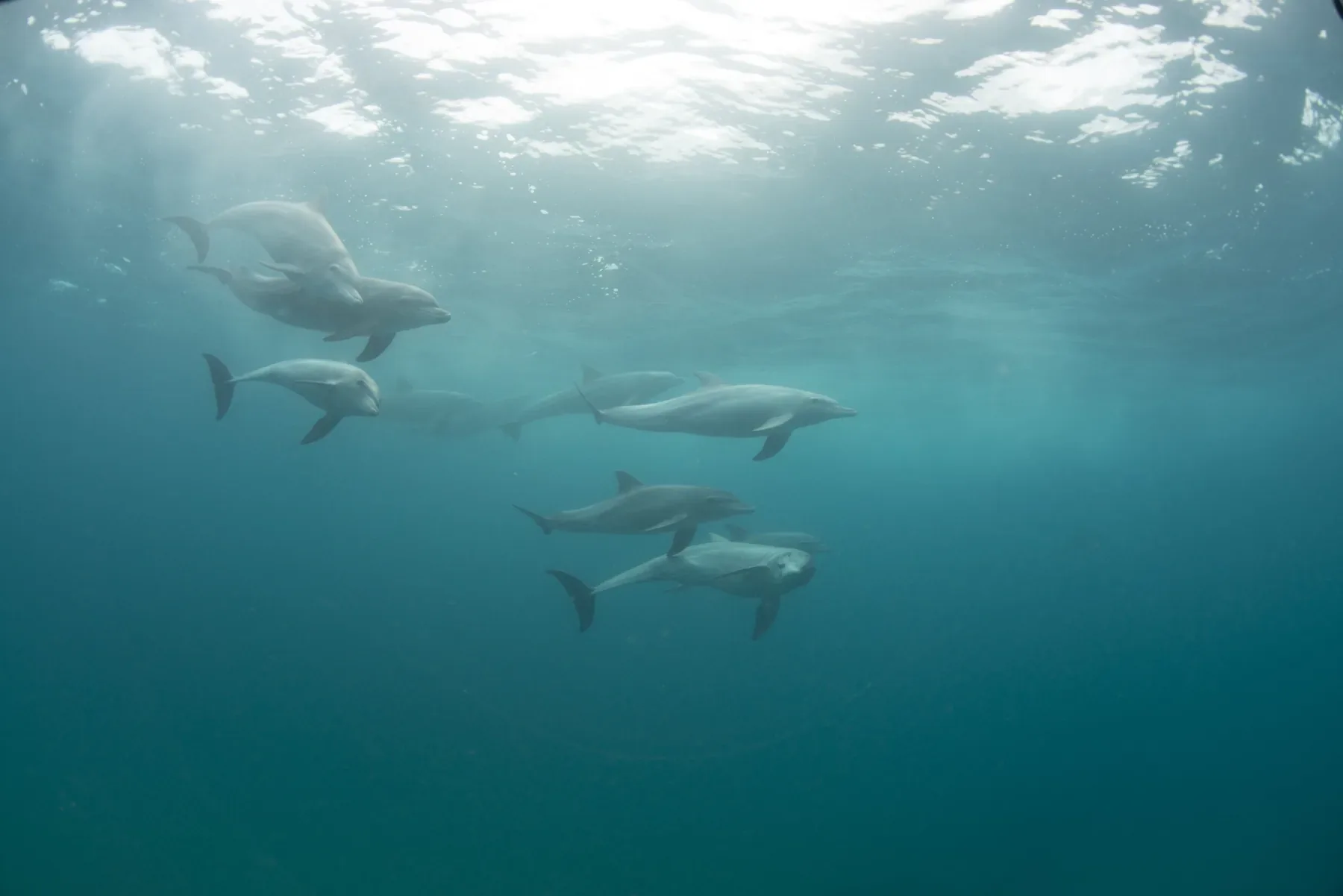
Turtles, rays, reef sharks, dolphins and the occasional whale shark add scale to the reef.
Submarine canyons drop away beyond the recreational reefs, part of the deep-water landscape that made Sodwana famous in marine science.
Sodwana has the depth and variety to keep experienced divers busy, but it is also one of the country's main training bases. Several operators run beginner courses, Discover Scuba experiences and progressive certification.
If you don't dive, you don't sit at the lodge waiting. Beach days, snorkelling, turtle tours, ocean trips and the inland region behind you mean Sodwana works for mixed groups.
Diving runs all year. The reason to pick one month over another is the combination of visibility, water temperature and which large animals are moving through.
PADI describes Sodwana as a year-round dive destination. Sea conditions still vary day to day, and launch decisions remain weather dependent.
PADI currently identifies the winter months as a period of particularly good visibility around Sodwana, with cooler but still subtropical water.
Loggerhead and leatherback nesting season gives you a second reason to be on the coast after dark, with guided turtle tours running in the wider iSimangaliso season.
Humpback whales migrate along the iSimangaliso coast through winter and spring, adding a surface wildlife show to a reef trip.
Accommodation runs from dive-focused lodges to self-catering around Sodwana and Mbazwana.
Relaxed Sodwana base with chalets, rooms and glamping, plus the on-site Twobar Scuba operation.
Self-catering and event accommodation around 10 km from Sodwana Bay Beach.
Additional accommodation around Sodwana and Mbazwana is listed on the Stay page.
Member lodge with an on-site accredited dive operation, courses, gear and guided reef excursions.
PADI dive resort, professional charter and accommodation operating in Sodwana Bay.
Family-run dive centre offering training and guided diving from Sodwana Bay.
Boutique scuba and ocean-safari charter operating inside iSimangaliso Wetland Park.
Long-running Sodwana charter offering guided dives across the bay's reef sites.
Sodwana's marine story doesn't stop at the waterline. Loggerhead and leatherback turtles nest on the sandy iSimangaliso coastline, which ties the reef to one of Maputaland's longest-running conservation stories.
The same protected system holds dune forest, wetlands and lakes inland, which is why a Sodwana trip slides so easily into Lake Sibaya and the Coastal Forest.
Sodwana is far easier to reach than the remote Coastal Forest camps, but there's still a difference between reaching the Sodwana / Mbazwana area and reaching the actual beach.
The standard southern approach leaves the N2 at Hluhluwe and runs north-east on tar through Mbazwana to Sodwana. Sodwana Bay Lodge currently puts the drive from the Hluhluwe turn-off to the Mbazwana / Sodwana area at roughly 97 km.
Once you're in the area, your accommodation or dive operator will tell you exactly where to meet, park and move gear. Divers go to the launch through their operator rather than treating the beach as a self-drive dive site.
December and the major holidays are much busier than the rest of the year. If you're here for the reefs rather than the festive beach crowd, the shoulder periods feel markedly calmer.
GATEWAY · FROM DURBAN · DIVING · PROTECTED AREA
The best Maputaland itinerary treats the reefs as one landscape in a sequence: Lake Sibaya and the Coastal Forest to the north, Tembe inland, Kosi if you have the time. Open the regional map, or let a Visit Maputaland tour-operator member join the pieces.